 27 Jul 2026
Recently, the 2025 Shanghai Science and Technology Conference and the 2025 Shanghai Science and Technology Award Ceremony were held. ECUST, as the primary completing institution, received a total of 17 awards, including 9 first prizes, 6 second prizes, 1 Youth Outstanding Science and Technology Contribution Award, and 1 International Science and Technology Cooperation Award.
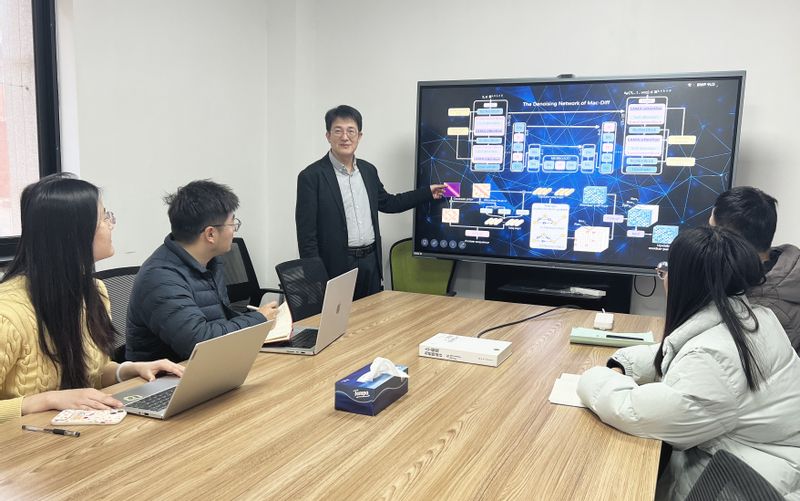
Primary Completing Institution: ECUST
Lead Investigator: Prof. Honglin Li
Award Category: First Prize in Natural Science
To address scientific challenges such as low efficiency in new drug discovery, difficulty in predicting drug efficacy, and complex system modeling, the research group established an AI-empowered drug discovery paradigm shifting from physics-based models to knowledge-driven approaches. They developed drug screening methods based on three-dimensional molecular similarity, a theory for drug efficacy design based on binding kinetics, and AI design methods for new-modality drugs, improving the efficiency and success rate of innovative drug discovery.
First, to improve low success rates in drug discovery methods, the team proposed a 3D molecular similarity triangular hashing algorithm based on spatial pharmacophore features. This approach resolved matching and computation challenges in real 3D structural scenarios, achieving a paradigm upgrade from traditional analog-based strategies to scaffold hopping and improving the hit rate of active compounds.
Second, to overcome the inability of existing methods to dynamically predict drug–target interactions and efficacy, they proposed a strategy combining protein folding energy landscapes with chemical reaction transition state theory, and developed the first computational method for accurately calculating drug–target binding kinetic parameters, thereby addressing the difficulty of efficacy prediction in drug design.
Third, to tackle the lack of effective theoretical models and computational methods, they established, for the first time, an AI design model for new-modality drugs based on knowledge-driven technology, resolving the R&D challenge of blind experimental trial-and-error.
Fourth, targeting drug discovery difficulties in anti-RNA virus and oncology fields, they applied these theoretical methods to the new drug discovery process, yielding over 20 highly active candidate drug scaffolds, 39 publications, 15 authorized invention patents, the transfer of 2 drug candidates, and the completion of a Phase I clinical study for one candidate.
The developed methods have been downloaded over 1,000 times by researchers worldwide, and the online platform has attracted over 39,000 domestic and international users, for whom it has completed more than 196,000 scientific computing tasks. Multiple international institutions have adopted these methods as benchmarks, and many research groups at home and abroad have successfully applied them to candidate drug discovery and experimental validation. The methods have demonstrated notable advantages in drug discovery targeting RNA viruses and oncology, providing methodological support for further innovation in drug discovery and development.