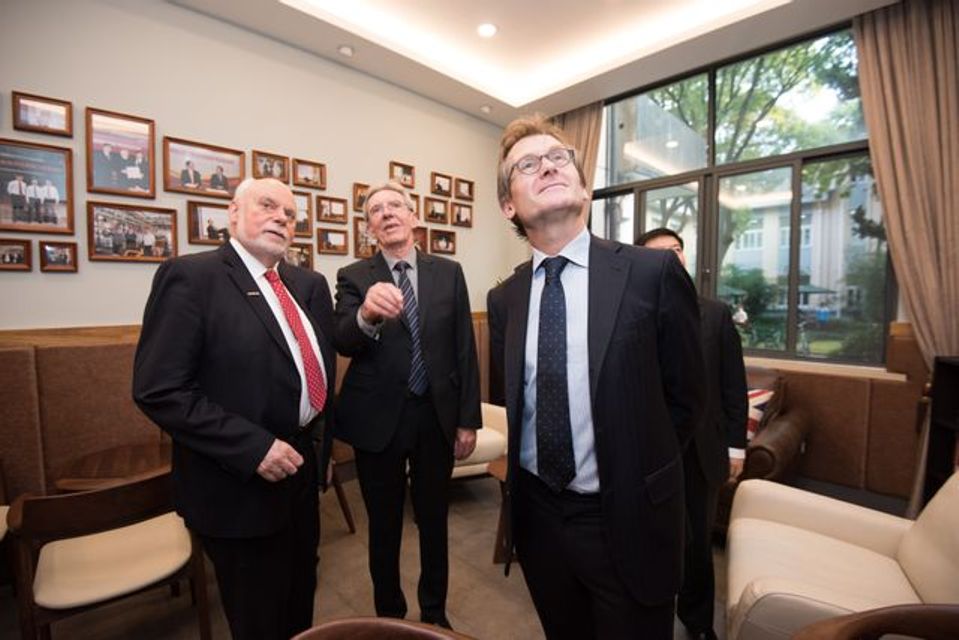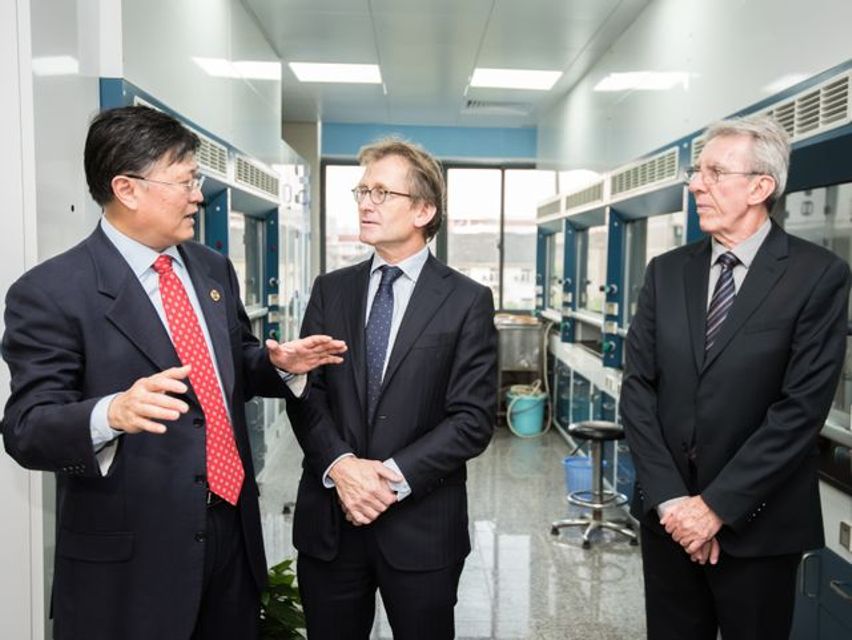
The Joint International Laboratory for Precision Chemistry (JIL-PC) is a cutting-edge research platform which was built upon the foundation of the Key Laboratory for Advanced Materials (Ministry of Education, China). It was established by East China University of Science and Technology (ECUST). In collaboration with world-class universities and laboratories including the Hebrew University of Jerusalem (Israel), JIL-PC was created in alignment with China’s Belt and Road Initiative.
The Laboratory integrates top-tier scientific expertise and research resources, featuring distinguished scholars such as:
Academician He TIAN (Chinese Academy of Sciences);
Prof. Itamar Willner (Israel Academy of Sciences and Humanities);
Prof. Bernard L. Feringa (2016 Nobel Laureate in Chemistry).
JIL-PC is dedicated to:
Pioneering fundamental research and applied development;
Establishing an internationally renowned research platform in precision chemistry;
Building a world-class interdisciplinary research team;
Developing a premier global hub for cultivating top-tier scientific talents.
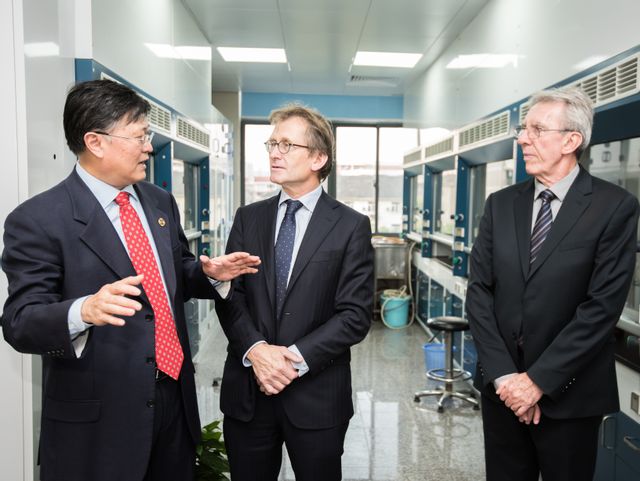
The laboratory collaborates with the leading scholars from the Hebrew University of Jerusalem (Israel), the University of Groningen and KTH Royal Institute of Technology.
Among them, Prof. Itamar Willner from the Hebrew University of Jerusalem (Israel) stands as a globally distinguished scholar in photoelectrochemical sensing. His pioneering research has created new paradigms at the nexus of molecular-scale electronics, photon-matter interactions, nanofabricated biosensors, and biological optoelectronic systems. His research demonstrates unique strengths in precision photoelectric sensing.
Professor Bernard L. Feringa from the University of Groningen has made outstanding research contributions and maintains an internationally leading position in the field of precision synthesis.
Prof. Hans Ågren from the KTH Royal Institute of Technology is an internationally-renowned theoretical chemist with profound expertise in investigating material structures, reactivity, properties, and spectra through quantum theory and computational programs.
The Laboratory is dedicated to driving innovation in catalysis, energy conversion, smart materials, and biomedical technologies through the synergistic integration of cutting-edge experimental approaches with advanced computational modeling.
Since its establishment, the Lab has fostered collaborative innovation and research efforts in key areas including:
Developing novel precision synthesis methodologies for structurally controlled optoelectronic molecules;
Interface photoelectrochemical analysis methods and instrumentation;
Theoretical computational approaches and applications for complex systems and functional materials.
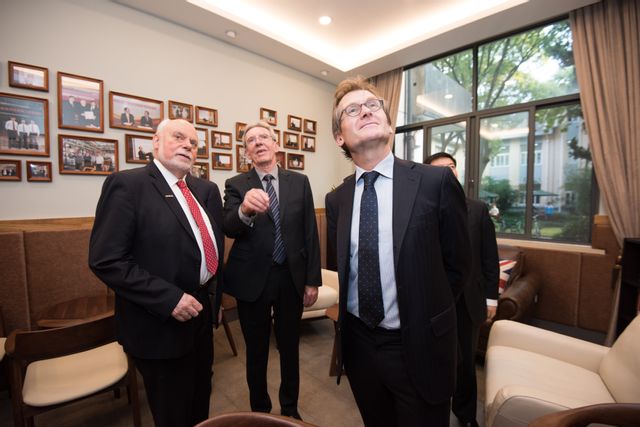
Equipped with high-end instrumentation and supported by a highly motivated team, JIL-PC serves as a research hub for academic excellence and industrial innovation. Its work supports Shanghai’s ambition to become a global leader in science and technology.
The Laboratory has made groundbreaking research achievements with international recognition, including multiple high-impact publications in top-tier journals such as Science, Nature, and Journal of the American Chemical Society.
It has also nurtured over 20 national and provincial-level talents, including:
Recipients of the National Science Fund for Distinguished Young Scholars;
Excellent Young Scientists Fund awardees;
Young Top-Notch Experts from the National “Ten Thousand Talents Program”;
Shanghai Young Scientific and Technological Talents;
Shanghai Young Academic Leaders.
These achievements have substantially strengthened its capabilities in pioneering frontier research while developing world-class innovative talent. Furthermore, the contributions of the Laboratory have played a significant role in advancing the scientific and technological dimensions of the Belt and Road Initiative.