 04 Aug 2026
Recently, the 2025 Shanghai Science and Technology Conference and the 2025 Shanghai Science and Technology Award Ceremony was held. As the primary completing institution, ECUST received a total of 17 awards, including 9 first prizes, 6 second prizes, 1 Youth Outstanding Science and Technology Contribution Award, and 1 International Science and Technology Cooperation Award.
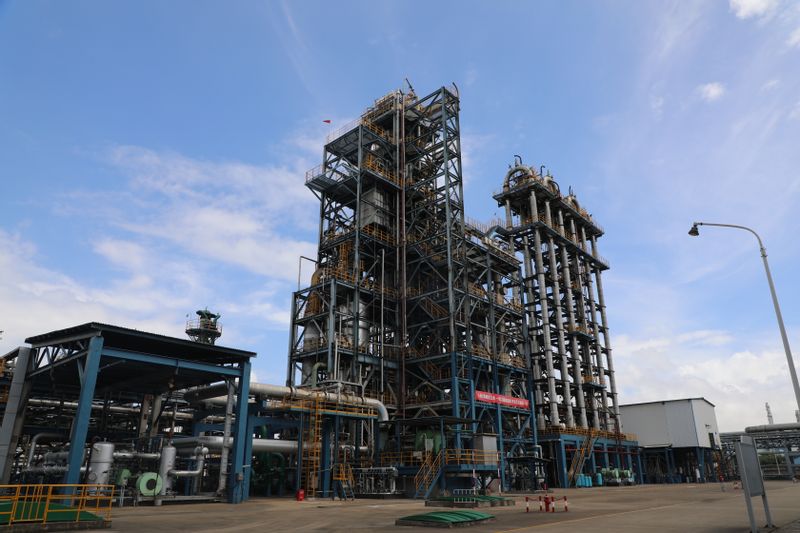
Polyolefins are China’s largest category of basic polymer materials, yet the self-sufficiency rate of high-end products remains below 40%. Their performance is determined by microscopic chain structures, while conventional manufacturing relies heavily on macroscopic indicators such as melt flow index, making precise and stable regulation difficult. Addressing this challenge, the research team spent more than 10 years developing an integrated technology, software, and system for forward prediction and closed-loop regulation across the “process parameters–microstructure–macroscopic properties” chain.
For microstructural characterization, the team developed multiscale modeling technology and achieved the first industrial-scale, online prediction of molecular weight distribution and copolymer composition. For new product grade development, the team proposed a microstructure-oriented inverse design strategy that establishes quantitative relationships between molecular chain structures and macroscopic properties, enabling targeted optimization of manufacturing parameters. The team also developed real-time control technology based on equivalent dimensionality reduction and established an equivalent control system for active-site component concentrations, enabling dynamic regulation of intrinsic product quality indicators.
The project has resulted in 26 granted invention patents and 10 registered software copyrights, forming a key technology system with fully independent intellectual property rights and reaching internationally leading levels according to expert evaluation. The technologies have been successfully applied in China’s only supercritical bimodal polyethylene production unit at Sinopec Shanghai Petrochemical, reducing fluctuations in key components during the production of high-grade PE100 pipeline materials by 50% and decreasing annual off-spec product output by 3,300 tons.
At Sinopec Zhenhai Refining & Chemical, the technology supported the successful one-time development of more than 10 new polypropylene grades with high flowability and high impact resistance. Their key performance indicators surpassed mainstream domestic and international products, generating over RMB 2 billion in additional output value over the past three years.
The achievements can be directly extended to more than 200 polyolefin production units across China, providing a demonstration pathway for the high-end and intelligent development of polyolefin manufacturing.