 07 Oct 2026
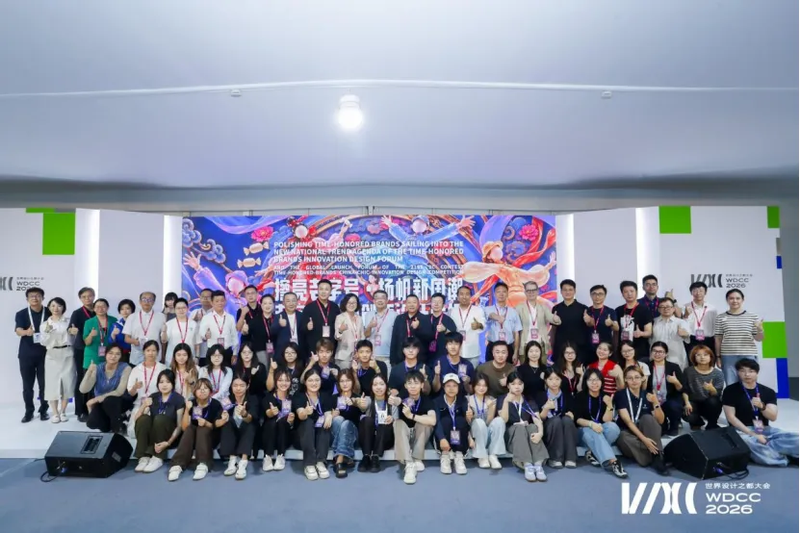
Recently, the Forum on Innovative Design for Time-Honored Brands was held as part of the 2026 World Design Cities Conference. Hosted by ECUST and organized by its School of Art Design and Media, the event explored how design and digital technologies can revitalize traditional brands. It also marked the global launch of the “Time-Honored Brands and New Chinese Chic” special track of the 21st China Creative Challenges Contest.
Yifei Zheng, Deputy Director of the Division of Consumer Goods and Fashion Industry Development at the Shanghai Municipal Commission of Economy and Informatization, emphasized the importance of preserving quality while adapting to changing consumer demands.
Hua Chai, Member of the Standing Committee of the CPC ECUST Committee and Director of the Publicity Department, highlighted opportunities for brand innovation arising from Shanghai’s development as a City of Design.
Jun Wang, Dean of the School of Art Design and Media at ECUST, underscored the school’s commitment to integrating science and art, cultivating talent, and strengthening industry collaboration.
Four keynote speakers discussed approaches to revitalizing heritage brands. Qingfeng Xie, Secretary-General of the China Creative Challenges Contest, discussed the relationship between culture and creativity in the context of technological development. Stephen Waller, a professor at Brand University of Applied Sciences in Germany, shared international perspectives on the relationship between brands and tradition. Yuanzhu Zhou, Director of the Shanghai Institute of Corporate Culture and Branding, explored ways for traditional brands to respond to consumer demands. Haijun Ni, a professor from the School of Art Design and Media of ECUST, discussed the potential of artificial intelligence in design education and brand innovation.
The first roundtable, themed “AIGC-Empowered Rejuvenation of Heritage Brands and the Reinvention of Chinese Chic,” explored how generative AI and new forms of expression could help time-honored brands appeal to younger consumers while preserving their cultural essence. Participants included Xuesong Cheng, Jian Zhang, Yutian Wang, and Dingyu Wu.
The second roundtable on “Cultural Confidence and Cross-Cultural Communication in Taking Time-Honored Brands Global” was moderated by Hong Zhao, Dean of ECUST’s School of Foreign Languages. The participants exchanged views on overcoming cultural barriers, strengthening cross-cultural communication, and expanding overseas markets.
At the competition launch ceremony, Jinku Liu, Dean of ECUST’s School of Innovation and Entrepreneurship, highlighted how innovation and entrepreneurship education connects classroom learning with social practice. He encouraged participants to draw inspiration from traditional culture and bring fresh ideas to the revitalization of heritage brands.
The special track was jointly launched by representatives from ECUST, the competition, government organizations, industry associations, and enterprises.
As one of the key events of the 2026 World Design Cities Conference, the forum provided a platform for dialogue across culture, technology, education, and industry. Through keynote speeches, roundtable discussions, and the involvement of young creative talent, it encouraged collaboration to support innovation among time-honored brands. In the future, ECUST will continue to promote interdisciplinary collaboration to help Chinese heritage brands reach younger and international audiences.