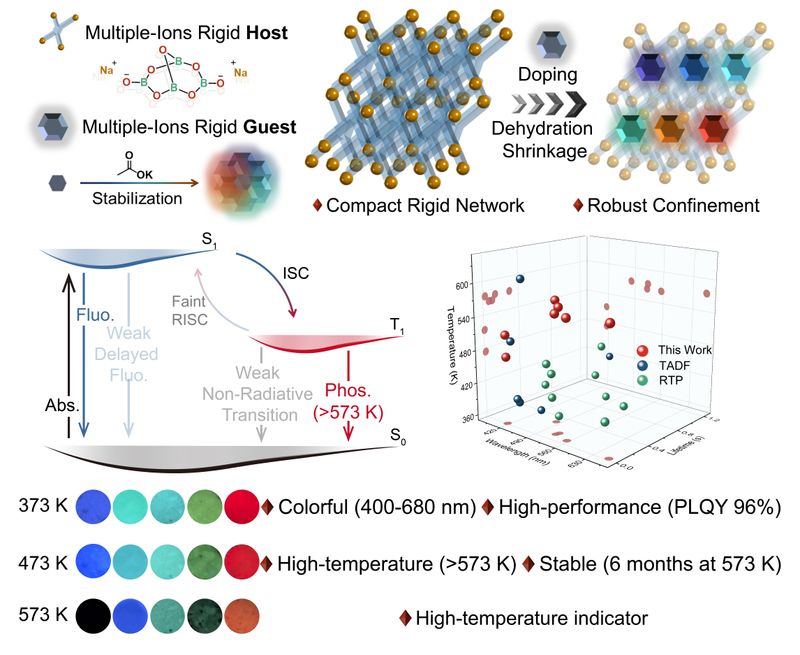
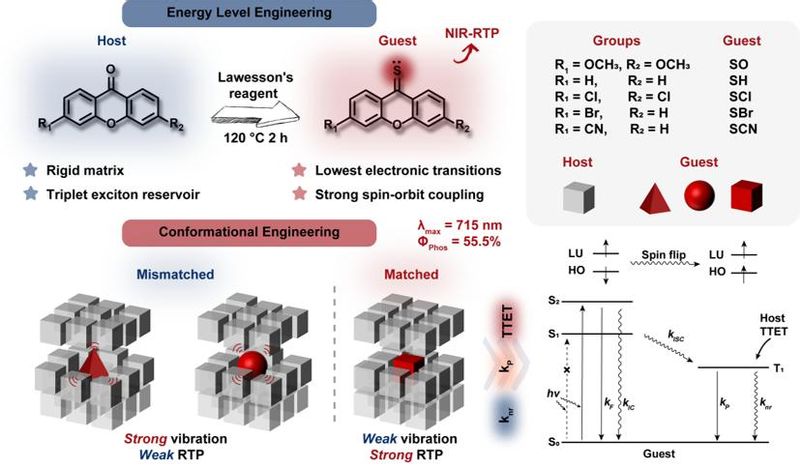
Near-infrared (NIR) phosphorescent materials are regarded as ideal candidates for next-generation in vivo imaging and diagnostic technologies due to their excellent tissue penetration, long lifetime, and high signal-to-noise ratio. However, constrained by the energy gap law, the inherently low triplet energy levels of NIR phosphorescent materials significantly increase the rate of non-radiative transitions, resulting in generally low phosphorescence quantum yields. This inherent drawback severel
2026-08-15
 LEARN MORE